

Unifying Chaos and Order: The Hidden Motif of Reality

The universe as we know it is fundamentally physical in nature, emerging from a set of deterministic processes according to physical 'laws'. There is plenty of empirical evidence and theoretic rigour to support this assertion, but what if it is not actually the case?
Do we have evidence for an alternative ontology that does not contradict fundamental physics? In this speculative meditation, I will explore the wild possibility that there is indeed evidence for a non-physical ontology, grounded in information, and complementary to our scientific knowledge base.
In a way, this post is written to my former self - before I knew about my internal war between the arrogantly articulate empiricist and the sensitively anarchic artist. The more I learned about science and technology, the safer I felt in my “knowledge” of the world, the harder it became for new information to pass through my labyrinth of prerequisites. This is my shot at concisely passing my own test, with a much broader worldview. It is not science, or mathematics, or philosophy. It’s just a strange pitch.
A Novel Perspective
The answer to this question is not as simple as it seems. A peek beneath the surface of certain assumptions about the fundamental nature of reality may yield unexpected insights about both the world around us and the minds with which we perceive it.
I propose that by embracing some of the more mind-bending aspects of modern physics, we are confronted with a strange, non-physical system woven through the fabric of our reality. Stranger still is that it's not clear whether this system emerges from our external reality, or from within our own cognitive or intellectual processes, or from both. It is paradoxical, but not necessarily fallacious. Furthermore, you need not subscribe to any kind of mystical worldview to integrate this concept into your mental model of reality - it is complementary to physicalism, but more fundamental to idealism or other non-physical philosophies. The only difference is where it sits in your conceptual hierarchy.
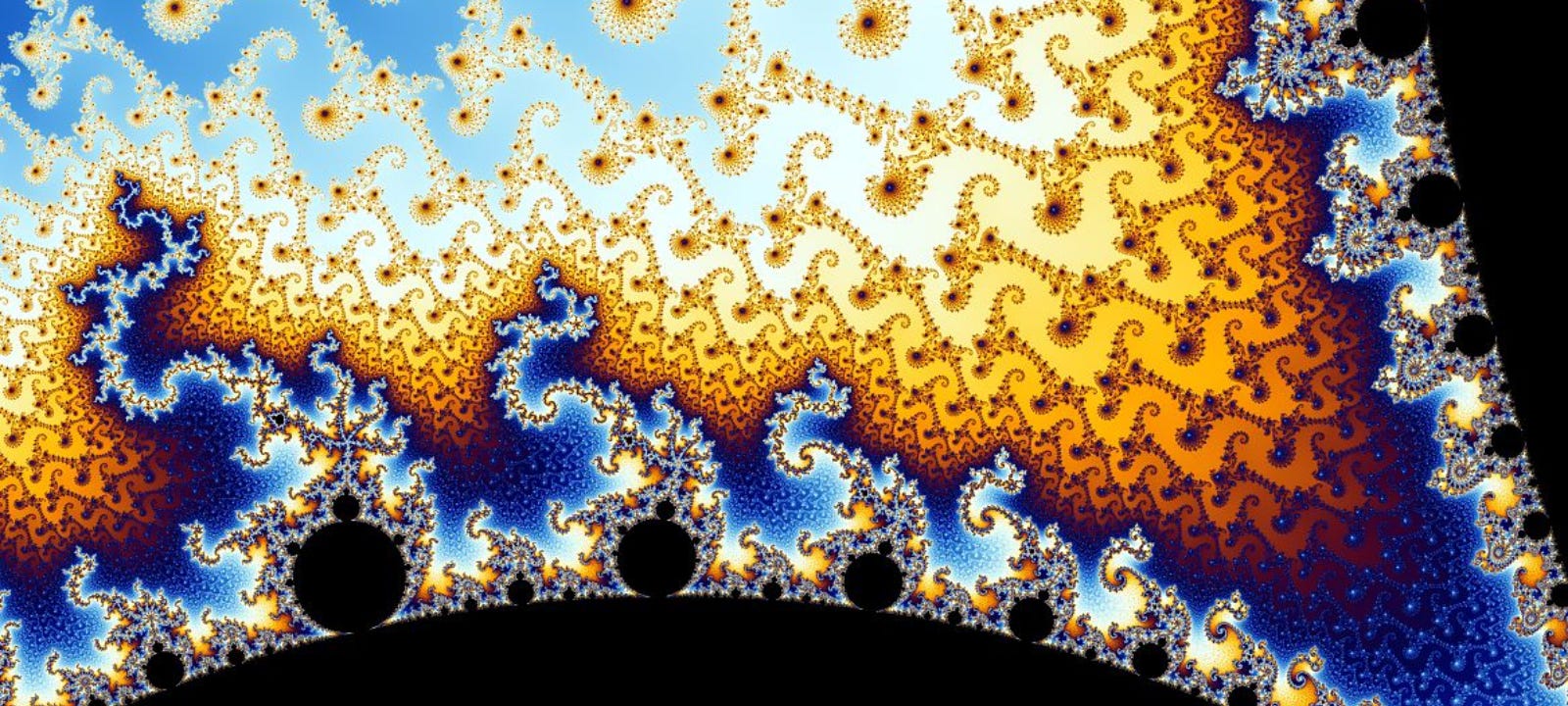
So what is this spooky, non-physical system? As far as I can surmise, the actual substance of the thing appears to be information. Just as the gods of the ancients wielded the tools of their time, and the emergence of mechanical machinery yielded a mechanistic model of the cosmos, the computational systems of the Information Age may provide new insight into our place in the universe.
Now, while I will discuss aspects of physics, I will not profess any expertise in this area, nor will I attempt to challenge our current physics. The purpose of this post is to speculatively explore some ideas that are in my opinion complementary to our current scientific knowledgebase, and that I am personally fascinated by. This idea doesn't just lean on the low-hanging fruit of regular quantum-woo. Even plain old General Relativity necessitates a non-linear concept of time, which is naturally pretty fucking difficult to wrap your head around, but that's no excuse not to try!
The Illusion of Chaos
Let's first consider the concept of chaos, and see how our informal understanding of this concept might be challenged by modern physics and mathematics.
If I asked you whether you thought the very formation universe was either:
Fundamentally random or 'chaotic', or...
Governed by an underlying fractal-like pattern with a tendency towards novel outcomes
... What would your answer be?
From my own experience, most people with at least a peripheral interest in science, especially those with a propensity for empiricism, would choose the first option. However, the concept of 'chaos' might not be what they would expect.
When most of us normies think about chaos, we think of total randomness; a mess of unpredictable noise. Pure chaos is actually rather easy to conceptualise - it is essentially what we know as Gaussian noise, otherwise known as 'normal noise' or 'white noise'. It is a uniform distribution of random values with no apparent structure at all.
However, in physics, the concept of chaos is rather different. Chaos theory deals fundamentally with systems in which deviation in the initial parameters results in aperiodicity; not the 'pure' randomness thought of colloquially as 'chaos'.
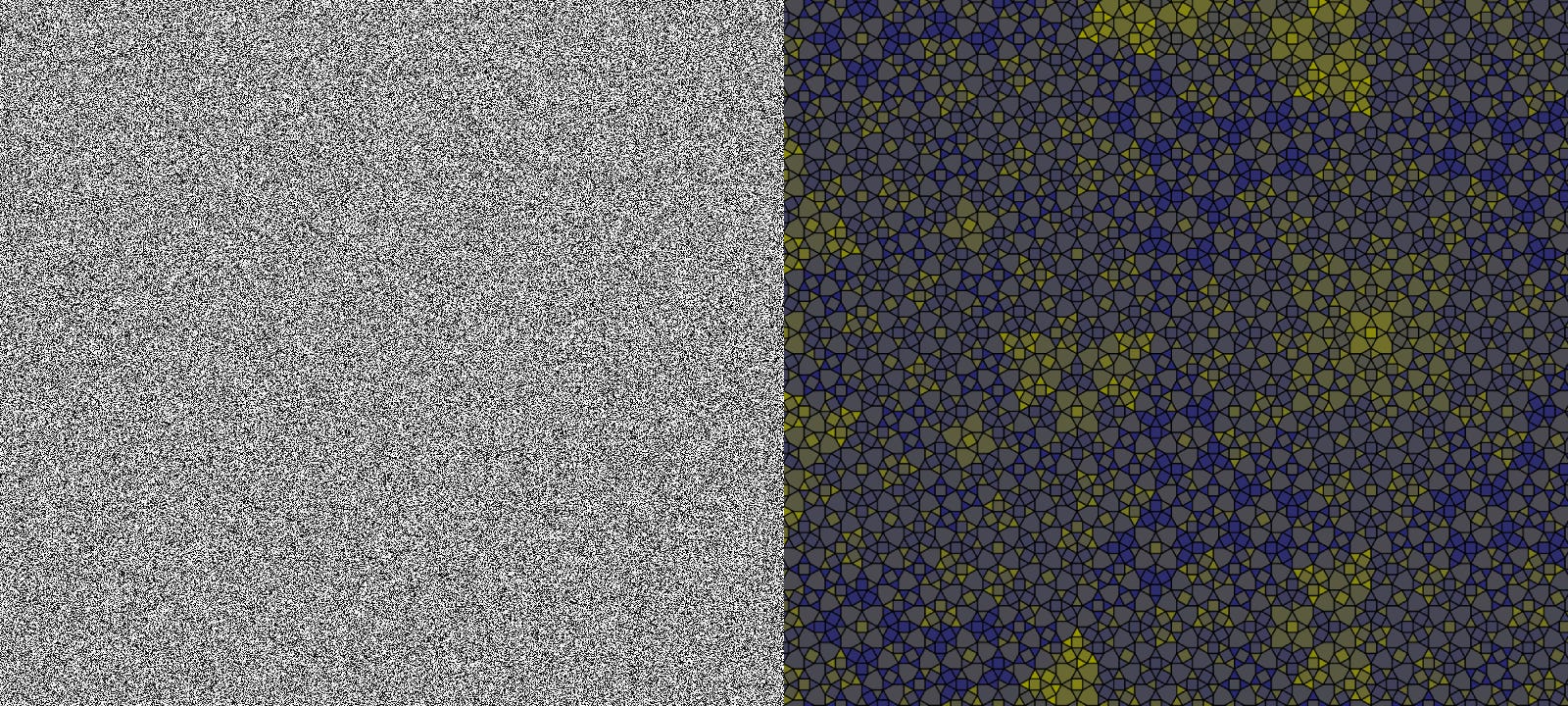
So what's the difference? What is 'aperiodicity'?
Aperiodic patterns can be characterised as recursive, self-similar functions that do not repeat the same motif more than once. In other words, an aperiodic pattern is very much a pattern, but it is ordered in a subtle way, where iterations of the pattern contain their own nuance, but that from a higher-order scale appear to repeat similar, but not identical, motifs. Examples of aperiodic patterns include Penrose tiles and fractal geometry, the latter of which is found frequently throughout nature. In fact, fractal geometry was discovered by Benoit Mandelbrot, who first expressed the 'Mandelbrot Set' as a means to measure complex and apparently chaotic geometry in nature, such as the geometry of coastlines. We find fractals in everything from earthquake fault networks to weather patterns, to tree branch formations, to Romanesco broccoli, and at all scales, from the microscopic to the cosmic. Even the Cosmic Microwave Background; the residual glow from our universe's hot and dense birth, is not uniformly random.
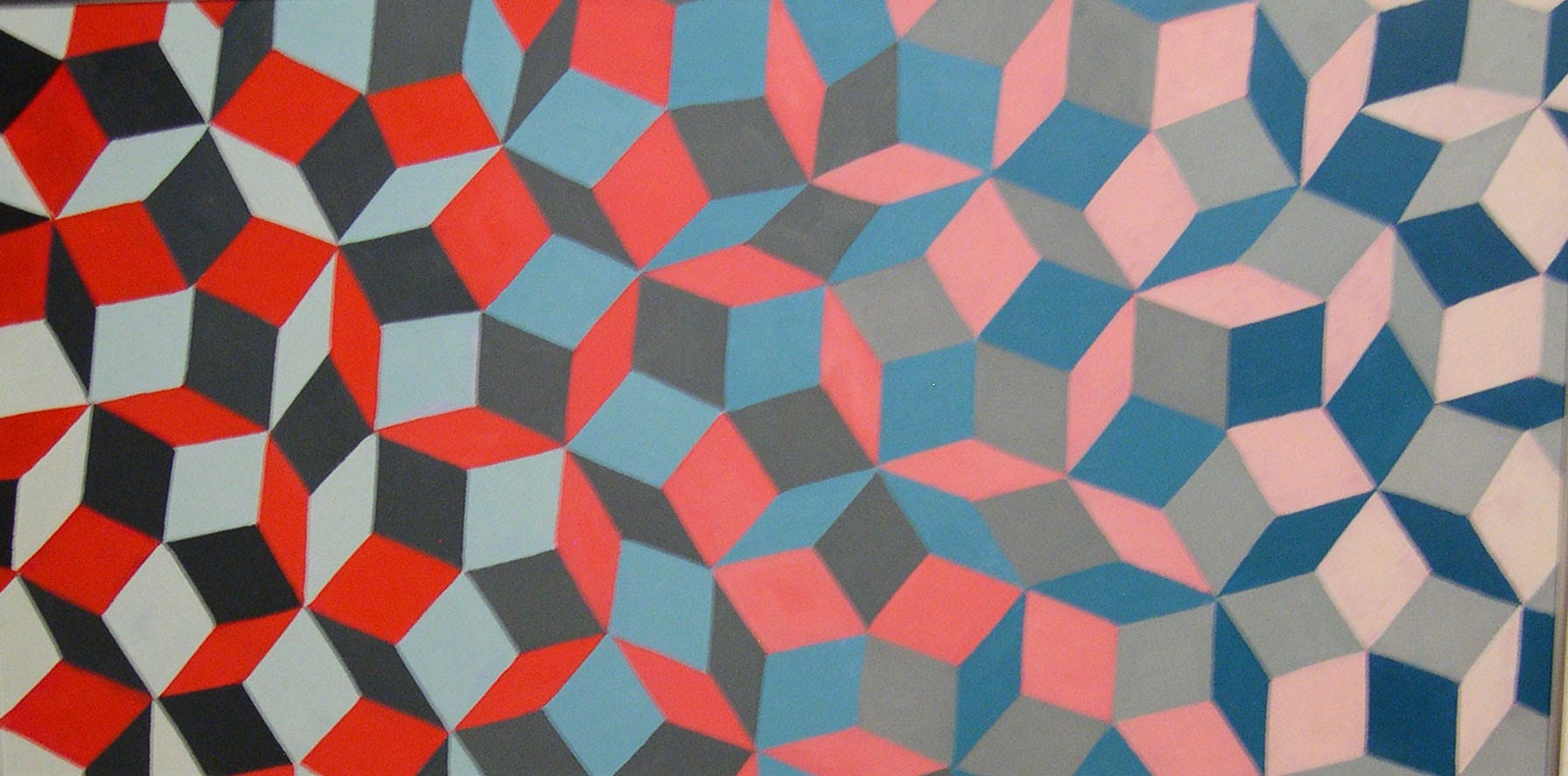
In this way, it seems our universe has a propensity towards motif. In fact, we have as of yet been unable to accurately model 'pure' chaos. Any system we use to produce a perfect example of normal noise will inevitably produce aperiodic artifacts.
In other words, we thus far have been unable to empirically demonstrate an example of 'pure', random, uniform chaos. What we perceive as chaos is not necessarily an absence of order - rather it is a deeper and more subtle form of order that touches everything we know.
The Motif of Chaos
The prevalence of aperiodic patterns in nature suggests a bizarre possibility: that the apparent chaos of the universe is necessarily punctuated by motif; that throughout the noise there is a deeper, generative order. This is the core insight of chaos theory - that simple, deterministic rules give rise to infinitely complex, non-repeating patterns.
What's especially interesting about the prevalence of motif in our universe is its fundamental dependence on chaos. Chaos and order have an antonymous relationship: each is defined by the absence of the other. In chaos theory, aperiodic patterns arise directly from chaos. Chaotic initial conditions are the prerequisite for the infinite aperiodicity that seems to underlie phenomena such as the Butterfly Effect.
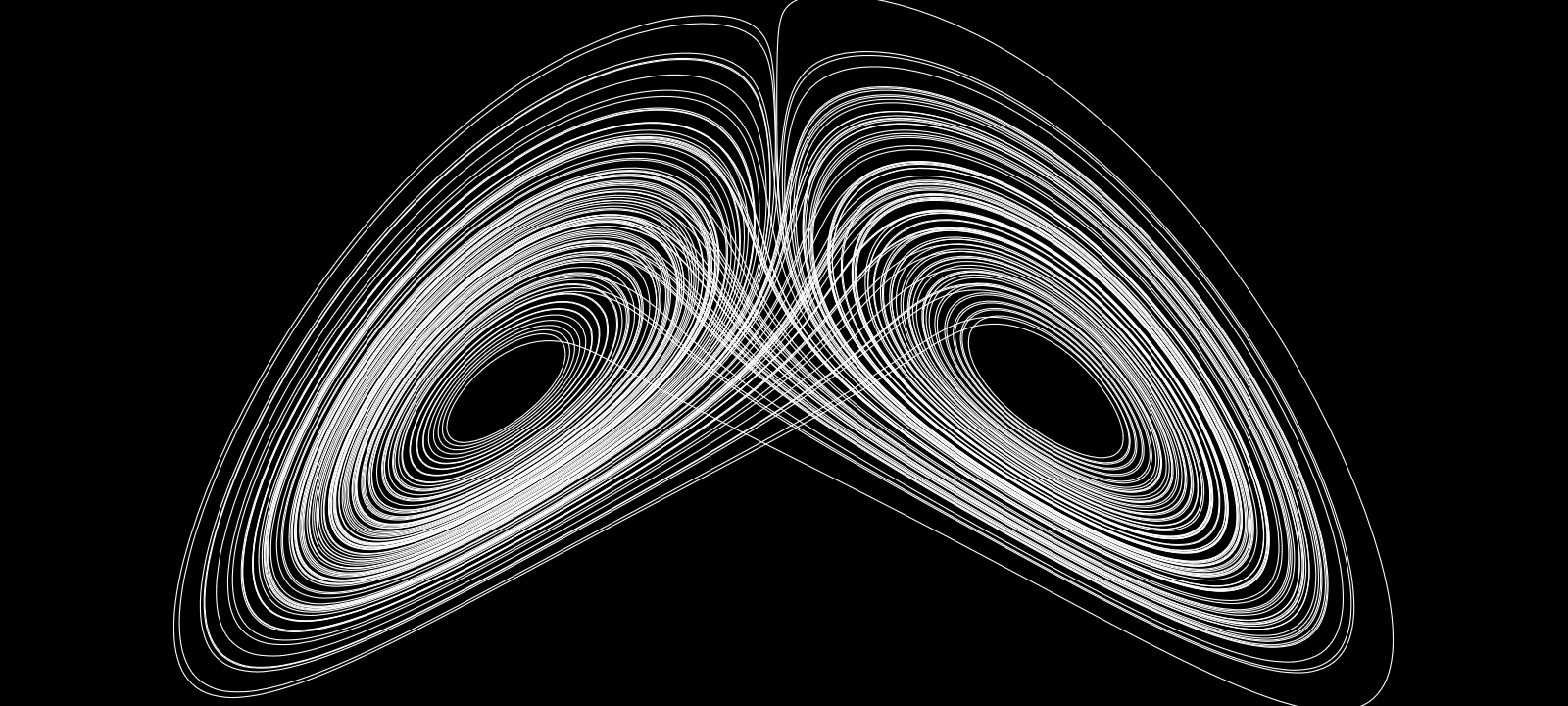
Is this circular reasoning, or is it just circular - a feedback loop? It seems that motif and noise are intrinsically codependent, each necessitating the other, both in language and in theoretical physics.
In the Mandelbrot set, the most fascinating patterns occur at the boundary between order and chaos - it's this threshold between numbers that fall within the Mandelbrot set, and those that fall outside the set, that produces the novel forms and edges that characterise the set. On one side of the threshold, there is order and repetition, while on the other side, all values slip away into a sea of unpredictable and irrational noise.
You could analogise this threshold to an event horizon. In fact the event horizon of a black hole behaves similarly to a fractal's threshold - on one side of this horizon, there is an ordered system of relational values, such as our physical 'laws', that represent the emergence of all that is. On the other side of the horizon, those logical structures appear to break down into infinities and irrational numbers, and our deterministic rules appear to no longer apply.
Consciousness and Confirmation Bias
When attempting to grasp these ideas, I'm met with a profound need for caution, so as not to fall victim to confirmation bias. Am I discovering real patterns, or projecting the ones I want to see? This raises questions about the nature of consciousness and the limits of our cognitive abilities.
Under scrutiny, I must accept that the patterns I discover may not just be external, but a reflection of the patterning instinct within the human mind. It's impossible to truly know if the observation of any kind of pattern is simply an artifact of human cognition in which the 'real' reality is purely chaotic. And if that were the case, it may effectively invalidate any perception of predictability anywhere. My coffee cup would just be an illusion; a mental construct of a motif, in which all my physical senses are colluding against me - tricking me into accepting a false belief that my cup exists at all. Likewise, empirical consensus could just be a projection of a pattern-matching mechanism that is common to all humans, in which we apply our systems of formal logic and predict testable outcomes, and those outcomes simply conform to our cognitive patterns, in which an experimental result is either valid or not.
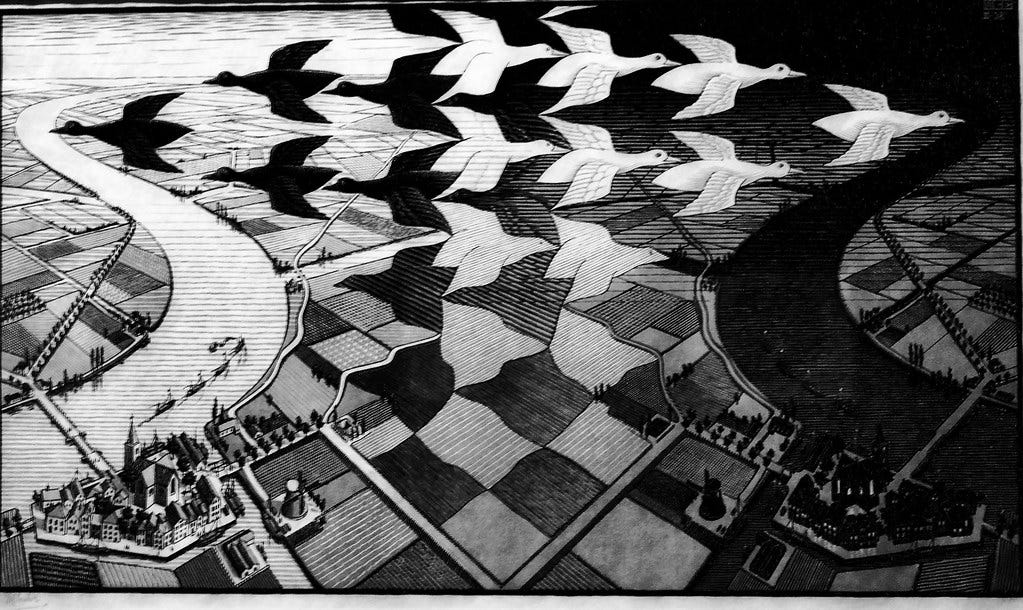
This is partly why empirical science deals in hypotheses, theories, and consensus, rather than the profession of fundamental truth. In fact there is, to date, no epistemological definition for what would even constitute an immutable truth.
To understand how our perception of patterns might shape our perceived reality, let's consider some concrete examples of how our minds model and predict the world around us: The current consensus on how the human mind interprets reality is that as we take in sensory input, our minds use that data to construct a model of our external reality. We use this model to visualise the parameters of our world and to make predictions about its behaviour. For example, my mental model predicts that if I ask my cat for literary critique, he will likely do a terrible job. If I tried it anyway, and he gave me an insightful analysis of my work, I would have to update my mental model to accommodate this revelation. This predictive, modelling mechanism seems to mostly take place in the neo-cortex; the part of the brain that has more recently evolved in humans, and is responsible for our silly, bulbous heads. It's also what provides the fundamental architecture for the neural networks that underpin our advances in artificial intelligence.
In seeking patterns, we are not just observing, but actively participating in the creation of reality because we are not just passive observers - we seek patterns in the world around us, and we use our insights to produce patterns of our own. The language we use to communicate is a pattern, as is the stock market, as is the ebb and flow of culture and art. Likewise, AI displays a similar interactive quality, through its ability to synthesise information from its training data and generate novel outputs as a result.
You can think of it as a process of signal analysis - we look for signal (motif) and filter out noise (chaos), and collectively function as what's known in the signal processing world as an expander - a device that increases the amplitude of signal above a certain threshold and decreases the amplitude of background information. That is pretty much the case for everything humans do.
And yet, no matter the level of objectivity that we strive for, we are all confined to our subjectivity - it is the one and only lens available to us. By daring to confront paradox, we may glimpse the deeper order underlying apparent chaos, and it may be that this order is simply a collective hallucination. Either way, it is at the edge of understanding - the event horizon of logical deconstruction, that the most profound insights are often found.
Culture and Society
I'll briefly digress into a more speculative and abstract aspect of this idea, to explore these patterns of information at a cultural and societal level. In a way, it is more accurate to be less specific here, since the systems at play are so complex that it would be impossible to reduce them down to simple mechanisms.
I think it is reasonable to say that our culture and social structures are examples of recursive motifs. It seems that human civilisation as we know it is the result of a recursive process of self-similar iteration. Even the most notorious evangelists of the neo-atheist, physicalist empiricism that is typical of Western culture, recognise this quality of nature. For example, Richard Dawkins' concept of the 'meme', defined as something which “conveys the idea of a unit of cultural transmission, or a unit of imitation”, explores the propagation and emergent behaviours of concepts and ideas in human culture over time.
Where Dawkins' thesis falls short, in my view, is that it does not offer an explanation for conceptual cultural similarities that do not share any known causal connections. For example, in the realm of anomalous phenomena, there are many examples of recorded events throughout the history of the world that seem to share no common links, but that bear uncanny resemblance to one another.
One example of this is the emergence of seemingly disparate religious texts that offer a metaphysical model of reality in which the universe is seen as one large mind from which physical reality emerges as a dream-like illusion. This idea is common to Hinduism, Buddhism, and even the non-canonical Old Testament gospels that form the basis of the Gnostic religion. Further, the basic concept is strikingly similar to aspects of contemporary philosophy, such as Bernado Kastrup's Analytical Idealism, or Nick Bostrom's Simulation Hypothesis which is increasingly popular in Western culture, and suggests that our reality is akin to a highly complex video game.
We also don't have to be quite so metaphysical about it - there are regular, mundane examples of disparate parallels in structures of information that we frequently put down to coincidence. For example, when you're speaking to someone and you both have the same idea at the same time and maybe even say it in unison before laughing about how weird it was. Or when an artist is working on a new piece, only to find that someone else on the other side of the world has had exactly the same idea and beats them to it by a slim margin. Is this bubbling up of similar motifs simply a product of cultural emergence, or is cultural emergence part of a larger, non-local system of information that has no regard for separation by spacetime?
What Does It All Mean?
So what does this all mean? What is the fundamental nature of reality?
If there is something to the idea that there is a non-physical, information-based aspect to the fundamental fabric of reality, is it then such a leap to draw connections between cultural motifs that otherwise appear disparate? Our conventional models require local, causal links to explain these similarities; the concepts should propagate through space and time in a deterministic way, and any disparate emergence of similar motifs is unexplainable, other than by the catch-all trump card of coincidence.
If we are to truly embrace Einstein's theory of General Relativity, in which time and space are intrinsically codependent, we must start to regard them as aspects of something more fundamental. This one thing, whatever it is, apparently gives rise to both space and time as properties of itself. If that truly is the case, then we must also accept that this thing exists on some kind of substrate in which time and space do not.
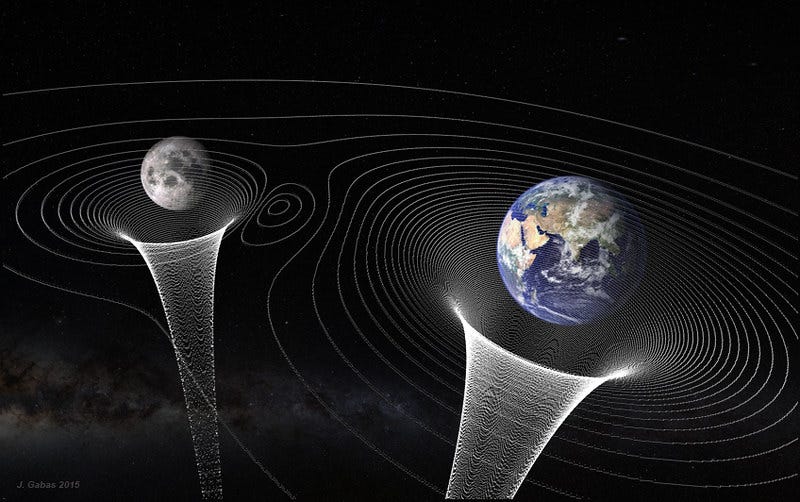
If it is this strange, ineffable, space-less and time-less substrate that also gives rise to the aperiodic mechanism that we identify in chaos theory, then this subtle pattern that seems to govern the emergence of information may simply be able to intersect with time and space, so that the exhibition of similar motifs may arise in a way that does not require any kind of physical causality. This is, in my view, a compelling complement to Dawkins' concept of a 'meme'.
Many substantial hypotheses share this view of reality as resulting from some kind of system of information, or as an illusory projection. I already mentioned Bostrom's Simulation Hypothesis, but there are many more compatible ideas: Gerard 't Hooft and Leonard Susskind's Holographic Principle, Max Tegmark's Mathematical Universe Hypothesis, the list goes on.
It’s Up To You
Is this non-physical aspect of reality an emergent property of physical systems, or is it a substrate from which physical systems emerge? The intellectual mind cannot help you here - it seems equally valid to assume that physical reality is fundamentally real, or that it is some kind of projection. We have no choice but to allow intuition to guide us through this impenetrable wall of cyclic bullshit.
My view is that at the very least, empiricism seems inadequate as a fundamental philosophy. It is incredibly useful as a scientific methodology, but to only accept empirical evidence as the foundation for your understanding of the world is needlessly limiting, and may unnecessarily inhibit your ability to derive insight from creative thought and analysis.
Go, Em! I'm about to post this piece on my blog in the certainty that some (most?) of my readers (not in the thousands!) will flock over here. They'll love this. Good work. Using initials as flimsy disguise so as not to be embarrassing.
neb5
I check Substack every week to see if a new essay has dropped from you. I’m never disappointed albeit I need to read it multiple times to grasp all of the concepts.